
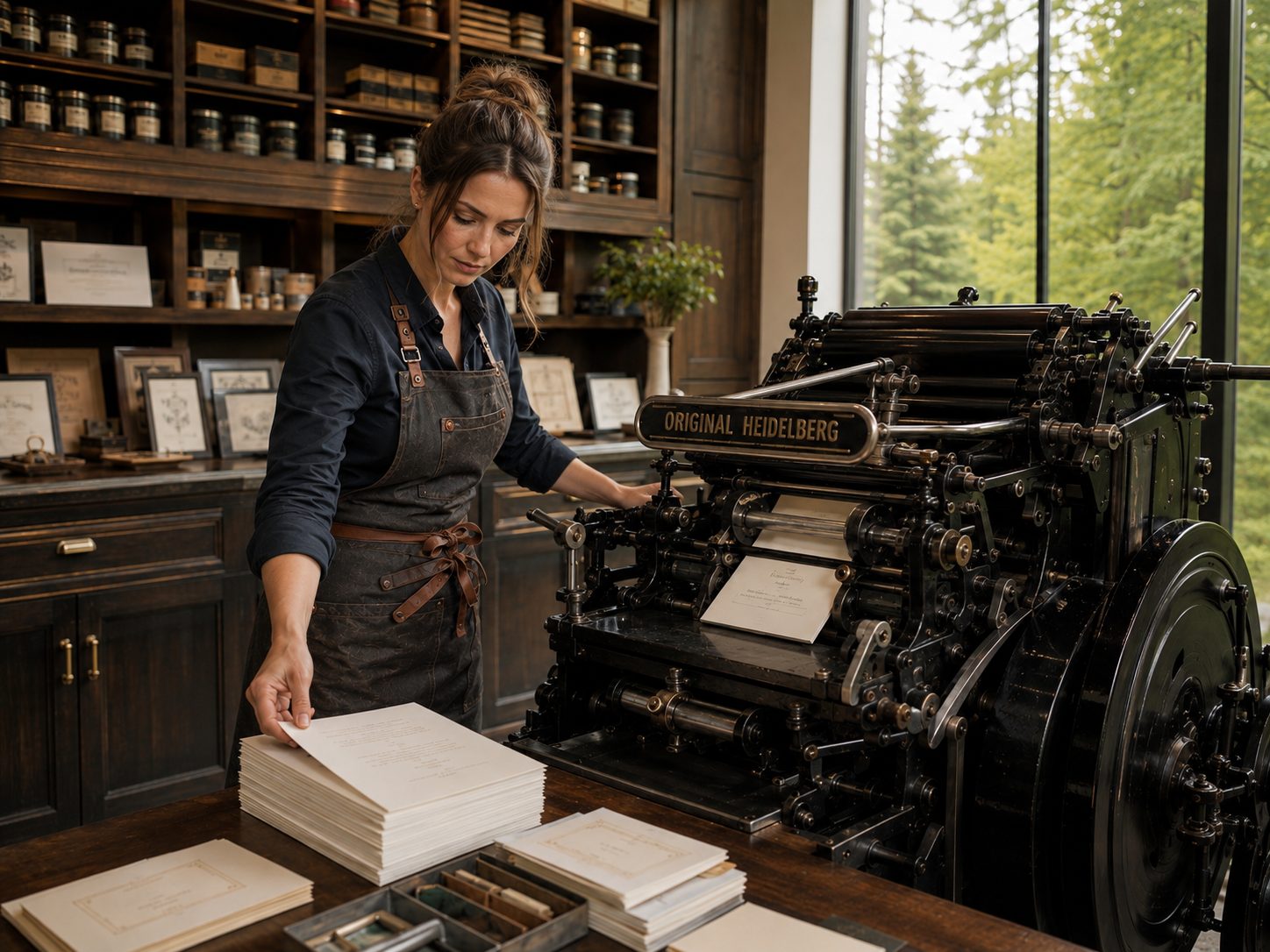
Paper weight should be the simplest specification in stationery, and in most of the world it is: grams per square meter, one number, done. Then there's the American system — where an 80lb paper can be dramatically lighter than a 65lb paper, where "text" and "cover" are secretly different units wearing the same clothes, and where I've watched intelligent adults order wedding invitations on what turned out to be brochure stock. I run a letterpress; paper weight is my grocery list. Let me untangle it once, properly, so you can buy with intent.
GSM: the honest system
Grams per square meter measures exactly what it says: weigh one square meter of the paper. Bigger number, heavier paper, no tricks. The useful landmarks:
- 75–90 gsm — copy paper, airmail sheets. Fine for drafts; show-through city for ink.
- 100–120 gsm — proper writing paper. Takes fountain pen and dip ink without ghosting; folds crisply.
- 200–250 gsm — light card: postcards, program covers, greeting cards from the supermarket.
- 300+ gsm — true card stock. This is correspondence-card and invitation territory; it stands up in a card rack and survives the post without a chaperone.
- 425+ gsm — the heavyweight class our press lives in: double-thick cotton that takes a deep letterpress impression on one side without bruising through to the other.
The American system: two rulers pretending to be one
US "pound" weight is the weight of 500 sheets at the paper's basis size — and here's the scandal: different paper categories have different basis sizes. "Text" paper is weighed at 25×38 inches; "cover" stock at a much smaller 20×26. So 500 big sheets of thin paper and 500 small sheets of thick card can land on similar numbers while being utterly different materials. The consequence you actually need: 80lb TEXT (~118 gsm) is nice writing paper; 80lb COVER (~216 gsm) is card. Same number, different worlds. Never buy on the pound number without the word after it. Anchors worth memorizing: 24lb bond ≈ 90 gsm (good letter paper) · 70lb text ≈ 104 gsm · 100lb text ≈ 148 gsm · 100lb cover ≈ 270 gsm · 110lb cover ≈ 300 gsm (the classic invitation weight) · 220lb double-thick cover ≈ 600 gsm (business-card armor).
Weight isn't thickness (the cotton exception)
Two papers at identical gsm can feel entirely different, because density varies. Wood-pulp papers pack tight and thin; 100% cotton paper bulks — airier, softer, thicker at the same weight, which is precisely why a 300 gsm cotton card feels more luxurious in the hand than a 300 gsm coated commercial stock. Thickness has its own measure (caliper, in points or microns), but your fingers already own the instrument: cotton's loft is what letterpress needs, cushioning the type's impression like snow taking a footprint. It's the whole reason this press prints on cotton and nothing else.
Buying by purpose
- Letters and half-sheets: 100–120 gsm (24–32lb bond). Heavy enough for two-sided ink, light enough to fold and post flat.
- Correspondence cards (flat notes): 300 gsm / 110lb cover minimum. A flat card that flops is a flyer.
- Invitations and announcements: 300–600 gsm; go double-thick when the event should be felt before it's read.
- Anything for a dip pen or brush lettering: weight matters less than surface and sizing — see the first-kit guide's paper section; a 90 gsm Rhodia outperforms a 200 gsm sponge.
Judging by hand
No spec sheet? Three field tests: the flick — hold a corner and snap it; card sounds a note, paper rustles. The stand — a proper correspondence card stands on edge on a flat table. The light — hold it to a window with your hand behind; the less your fingers show, the better it carries ink. Paper you can feel in the dark is paper the recipient feels too — and that feeling, before a word is read, is most of what "fine stationery" means. It's certainly what we stock the drawer with.