
Somewhere around week three, every calligraphy student compiles the same private list of grievances: the ink won't flow, then floods; the upstroke snags and spatters; the slant drifts like a ship without a rudder. Good news twice over. First, these faults are so universal they have names — you are not failing, you are syllabus. Second, nearly every one has a mechanical cause and a mechanical cure. Here is the troubleshooting table, symptom by symptom — starting with the plot twist that solves half of everything.
First, blame the paper (seriously)
The single most productive diagnostic in beginner calligraphy: before blaming your hand, test your paper. Feathered hairlines, fuzzy edges, mysterious blobs, snagging fibers, bleed-through — ordinary copy paper produces all five while you sit there concluding you have no talent. Draw one wet hairline on Rhodia or 32lb laser paper; if the problem vanishes, it was never you. Every fix below assumes decent paper; without it you're tuning a piano in a hailstorm. (Paper and the rest of the kit: the first-kit guide.)
"Railroad tracks" — the split downstroke
Symptom: your thick stroke arrives as two thin parallel lines with white between. Cause: the nib's tines spread wider than the ink film can bridge — either you're pressing harder than the ink supply supports, or the nib is running dry mid-stroke. Cures: dip more often than feels necessary (every few letters is normal, not failure); ease pressure ten percent; slow down — fast heavy strokes outrun the ink. If tracks persist on a fresh dip with modest pressure, the nib may be sprung (tines permanently splayed) — retire it with honor; nibs are consumable.
Snagging and spattering on upstrokes
Symptom: the nib bites the paper on the way up, sometimes flicking a fine spray of regret. Cause: pressure on a stroke that wants none, usually combined with too steep a nib angle attacking the sheet point-first. Cures: upstrokes are ghost strokes — the nib's weight alone, no hand pressure; lower your holder angle so the nib glides on its belly rather than stabbing on its point; and check that both tines touch the paper evenly (rotating the holder a few degrees fixes a world of scratch).
Blobs and floods
Symptom: a pregnant drop lets go mid-letter. Cause: overloaded nib. Cure: after dipping (just past the vent hole, no deeper), touch the nib's back to the jar rim or scrape it gently across the mouth — one deliberate offload every dip. If ink still floods, your ink may be too thin: sumi thickens agreeably if left uncapped for an evening.
Shaky hairlines
Symptom: the thin strokes tremble. Causes, in order of likelihood: writing too slowly (yes — hairlines want slightly more speed than shades; a crawling hairline registers every heartbeat), a death grip (see below), caffeine, and cold hands. Cures: let upstrokes travel a touch quicker and lighter than downstrokes; warm up for two minutes always; and accept that a faint natural tremor is human — it disappears at arm's length, which is where every envelope is read.
Wandering slant
Symptom: letters lean at three different angles per word. Cure one: slant guidelines under every practice page, no exceptions — consistency is a visual habit, installed by guides, not summoned by will. Cure two: rotate the paper, not your wrist — turn the page until your natural stroke direction matches the slant line. Most "I can't hold the slant" is paper sitting square when it should sit turned.
The death grip and the aching hand
Symptom: ten minutes of practice, an hour of hand cramp; strokes stiff as fence posts. Cause: pressure generated by strangling the holder rather than by the arm's weight. Cures: hold the pen like something borrowed and expensive; let shades come from the forearm leaning in, not the fingers clenching; drop your shoulders (they've been at your ears for twenty minutes); and put the pen down between rows. Tension is also a style problem — clenched hands write clenched letters.
The meta-fix: diagnose one thing per row
Practice with a single spoken focus per row — this row, ink management; this row, slant — and circle your best three shapes afterward to ask what they share. Faults fixed consciously stay fixed; faults muscled through return on the next envelope. The drills guide carries the full session structure, and the free practice-sheet maker prints the guided rows these diagnoses want.
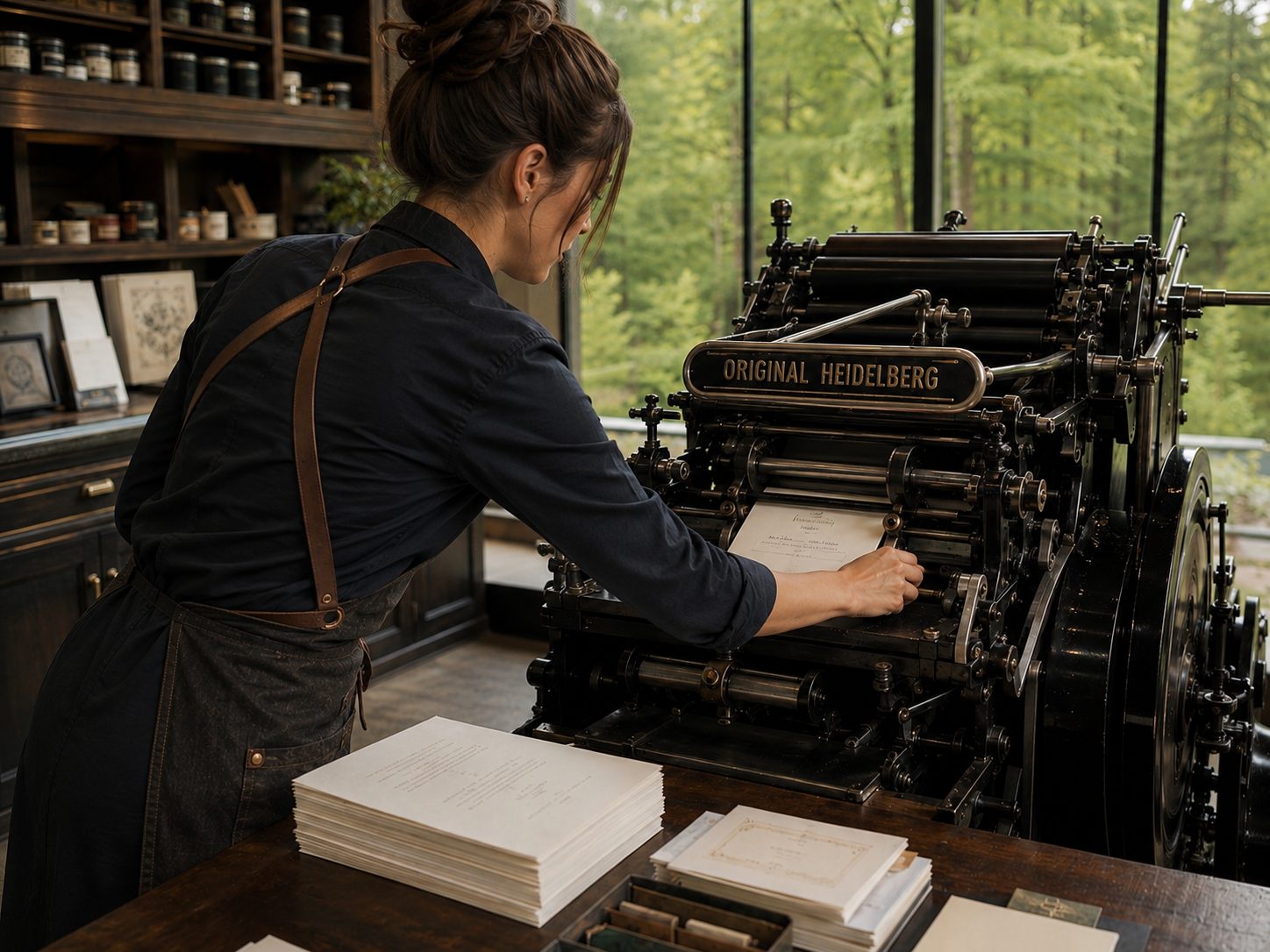
And when a page finally comes out clean — dated, kept, compared to week one — you'll see the real secret of the troubleshooting table: none of it was talent either way. It was ink, angle, paper, and patience, the same four levers this press has been pulling one sheet at a time since the trade began.